MVA Leads: How to Buy and Distribute Motor Vehicle Accident Leads in 2026
Buy MVA leads by state with real pricing, quality benchmarks, and distribution methods. Covers California, Florida, New York, Texas, and more.

Rafael Hernandez
Founder & CEO
Ex-Microsoft SWE · $10M+ PPL ad spend
I hope you enjoy reading this blog post. If you want to try Lead Distro AI for free, click here.
Author: Rafael Hernandez | Founder & CEO of Lead Distro AI
If you want to buy MVA leads, the fastest path is a lead distribution platform that connects you directly with verified motor vehicle accident leads filtered by state, injury severity, and case type. MVA leads are individuals involved in a car accident, truck collision, motorcycle crash, or other vehicle incident who are actively seeking legal representation. They are the most valuable lead type in personal injury because auto accidents account for roughly 52% of all PI cases in the United States, according to the Department of Justice. For lead generation agencies and law firms, MVA leads represent a consistent, high-demand vertical where qualified leads command $50 to $350 or more depending on exclusivity, geography, and injury severity. Nationally, the NHTSA reported over 6.7 million police-reported crashes in 2023, creating a massive and ongoing supply of potential claimants.
This guide covers where to buy MVA leads by state, what they cost in 2026, how to evaluate quality, how to distribute them to personal injury attorneys, and what compliance rules apply. NHTSA's 2024 traffic safety annual report estimated 40,990 traffic fatalities in the United States in 2023, with another 2.4+ million people injured in crashes severe enough to require medical attention (NHTSA Traffic Safety Facts, 2024), which keeps MVA case demand structurally high regardless of economic cycles. You can also explore the Lead Distro AI product tour to see how automated distribution works in practice.
Key Takeaways
- MVA leads are the highest-volume personal injury lead type, driven by the roughly 6.7 million car accidents that occur annually in the U.S. (NHTSA, 2023).
- Lead pricing varies significantly by state: competitive markets like California and Florida command premium rates, while smaller states offer lower acquisition costs.
- Lead quality depends on five factors: accident recency, injury severity, liability clarity, insurance coverage, and contact accuracy.
- Exclusive MVA leads cost 2x to 5x more than shared leads, but convert at significantly higher rates for law firms.
- Automated lead distribution software eliminates manual routing and delivers MVA leads to the right attorney in under one second.
What Are MVA Leads in 2026?
MVA leads (motor vehicle accident leads) are individuals who have been in a car accident, truck accident, motorcycle collision, or other vehicle-related incident and have expressed interest in hiring a personal injury attorney. These leads are captured through online forms, phone calls, or chat interactions where the person provides details about their accident, injuries, and contact information.
The buyers of MVA leads are almost exclusively personal injury (PI) law firms and legal intake centers. PI attorneys rely on a steady pipeline of MVA cases because they work on contingency. A single MVA case can settle for $20,000 to $100,000 or more, making the cost of acquiring that lead a small fraction of the potential return.
MVA leads can be segmented by accident type (car, truck, motorcycle, rideshare, pedestrian), injury severity (soft tissue, broken bones, TBI, spinal cord), and fault status (clear liability vs. comparative fault). These segments directly affect lead value and which firms want to buy them. For agencies also serving workplace injury attorneys, our workers comp leads guide covers the sourcing, scoring, and distribution strategies for that vertical.
MVA Lead Pricing in 2026
Lead pricing depends on exclusivity, geography, case severity, and how the lead is sold. Here is a breakdown of typical MVA lead pricing:
| Lead Type | Price Range | Details |
|---|---|---|
| Shared MVA Lead | $20 - $60 | Sold to 3-5 law firms simultaneously |
| Exclusive MVA Lead | $100 - $250 | Sold to one law firm only |
| Live Transfer (MVA) | $150 - $350 | Pre-qualified caller transferred directly to attorney |
| Exclusive + High Severity | $200 - $500 | TBI, spinal cord, or multi-vehicle accidents |
| Spanish-Language MVA Lead | $40 - $150 | Less competition, pricing varies by market |
Pricing varies by state, with California, Texas, Florida, and New York commanding premium prices due to high accident volume and attorney density. Use the lead pricing calculator to estimate your cost per lead across different distribution models.
For agencies distributing leads at scale, the margin between acquisition cost and sale price is where the business model lives. A lead generated via Facebook at $35 and sold exclusively for $150 represents a healthy margin, but only if the lead is routed to the right buyer instantly. That is where lead distribution software becomes essential.
Where to Buy MVA Leads by State
MVA lead pricing and availability vary widely depending on the state. Factors like accident volume, attorney density, tort system (at-fault vs. no-fault), and statute of limitations all influence what you will pay and how competitive the market is. Below are the top 10 states for buying motor vehicle accident leads in 2026.
California
California leads the nation in total motor vehicle accidents, with the California Office of Traffic Safety reporting over 200,000 injury crashes annually. Key metro areas include Los Angeles, San Francisco, San Diego, and Sacramento. California is a pure at-fault (tort) state with a two-year statute of limitations for personal injury claims. High attorney density in Los Angeles and the Bay Area makes this one of the most competitive MVA lead markets in the country. Lead pricing here trends toward the top of national ranges. Start routing California MVA leads through Lead Distro AI's geographic filters.
Florida
Florida is a no-fault insurance state, meaning drivers first file claims through their own Personal Injury Protection (PIP) coverage. However, victims with serious injuries can step outside the no-fault system and pursue at-fault claims. Florida has a four-year statute of limitations for negligence-based PI claims (reduced from five years under 2023 tort reform). Key metros include Miami, Tampa, Orlando, and Jacksonville. Florida also has a 30-day post-accident solicitation ban for attorneys. High crash volume and year-round tourism traffic make Florida a top-tier MVA lead market.
New York
New York operates under a no-fault insurance system. Accident victims must meet a "serious injury" threshold to file a tort claim against the at-fault driver. The statute of limitations is three years. New York City, Long Island, Buffalo, and Albany are the primary metro areas for MVA lead demand. The density of personal injury firms in NYC creates strong buyer competition, which supports premium lead pricing. Lead quality verification is especially important here because of the serious injury threshold requirement.
Texas
Texas is an at-fault state with a two-year statute of limitations and a modified comparative fault system (51% bar). It is the second-largest state by population and has some of the highest traffic fatality rates in the country. Houston, Dallas-Fort Worth, San Antonio, and Austin are the major metros. Texas does not cap non-economic damages in auto accident cases, which makes high-severity MVA leads particularly valuable to firms in this market. The combination of high volume and favorable plaintiff laws keeps Texas among the most active MVA lead states.
Georgia
Georgia is an at-fault state with a two-year statute of limitations and a modified comparative fault rule (50% bar). Atlanta dominates the MVA lead market in Georgia, but Savannah, Augusta, and Columbus also generate consistent demand. Georgia had over 400,000 crashes reported in 2022 according to the Georgia Governor's Office of Highway Safety. The growing metro Atlanta population continues to push accident volume and lead demand higher each year.
Illinois
Illinois is an at-fault state with a two-year statute of limitations. It follows a modified comparative negligence system. Chicago is the primary metro driving MVA lead demand, with significant volume also coming from the surrounding Cook County suburbs, Rockford, and Springfield. Illinois winters create seasonal spikes in accident-related leads due to icy road conditions. The concentration of PI firms in the Chicago metro makes this a competitive but high-volume market.
Ohio
Ohio is an at-fault state with a two-year statute of limitations and a modified comparative fault rule (51% bar). Major metros include Cleveland, Columbus, Cincinnati, and Dayton. Ohio's mix of urban highway traffic and rural two-lane roads produces a diverse range of accident types. The Ohio State Highway Patrol reports over 300,000 crashes annually. Lead pricing in Ohio tends to be more moderate than coastal states, which creates attractive margins for agencies buying and reselling leads.
Pennsylvania
Pennsylvania has a unique choice no-fault system where drivers select either "full tort" or "limited tort" coverage when purchasing insurance. Full tort policyholders can sue for all damages; limited tort restricts claims to serious injuries. The statute of limitations is two years. Philadelphia and Pittsburgh are the primary MVA lead markets, with Allentown, Erie, and Harrisburg providing additional volume. The split tort system means lead qualification must verify the claimant's coverage type.
Arizona
Arizona is an at-fault state with a two-year statute of limitations and a pure comparative negligence system, meaning plaintiffs can recover damages even if they are 99% at fault (reduced by their percentage). Phoenix and Tucson are the dominant metros. Arizona's rapid population growth, particularly in the Phoenix metro area, has driven accident volume upward. The state's comparative fault rules make a wider range of MVA cases viable for attorneys, which increases demand for leads that might be rejected in stricter jurisdictions.
New Jersey
New Jersey is a no-fault state with a verbal threshold and monetary threshold option. Drivers who choose the "limitation on lawsuit" option can only sue for serious injuries. The statute of limitations is two years. Newark, Jersey City, Trenton, and the suburban corridors connecting them are the primary lead markets. New Jersey's high population density and heavy commuter traffic on the Turnpike and Garden State Parkway produce strong and consistent MVA lead volume year-round.
How to Generate MVA Leads in 2026
There are several proven channels for MVA lead generation, each with different cost structures and lead quality profiles.
Paid Search (Google Ads) is the most direct channel. People searching for "car accident lawyer near me" or "MVA attorney free consultation" have high intent. Cost per lead ranges from $75 to $250 depending on the market. Legal keywords remain among the most expensive on Google, with average CPCs exceeding $50 in competitive metros.
Social Media Ads on Facebook and Instagram work well for MVA lead generation, particularly for reaching Spanish-speaking accident victims. CPLs are typically 30% to 50% lower than paid search, though intent is also lower.
SEO and Content Marketing drive long-term organic lead flow. Publishing content around "what to do after a car accident" or "how long to file a personal injury claim" captures people early in their decision process. Organic leads have no marginal cost once the content ranks.
Referral Networks include partnerships with chiropractors, auto body shops, tow truck companies, and medical providers who encounter accident victims daily. These referrals are often the highest-quality leads because they come with a personal recommendation.
Spanish-Language Campaigns represent a significant and underserved opportunity. Hispanic communities are the fastest-growing demographic in the U.S., yet most agencies only run English-language campaigns. Bilingual Google Ads, Spanish Facebook campaigns, and Spanish-language landing pages can reduce CPLs by 40% to 60% while reaching an underserved audience.

How to Distribute MVA Leads to Law Firms in 2026
Generating MVA leads is only half the equation. Getting the right lead to the right attorney at the right time is what separates profitable agencies from those bleeding money on wasted leads.
Real-Time Delivery is critical. Research shows that leads contacted within five minutes are 21x more likely to convert. In the legal vertical, attorneys who call within 60 seconds dramatically outperform those who wait hours. Automated lead routing ensures sub-second delivery.
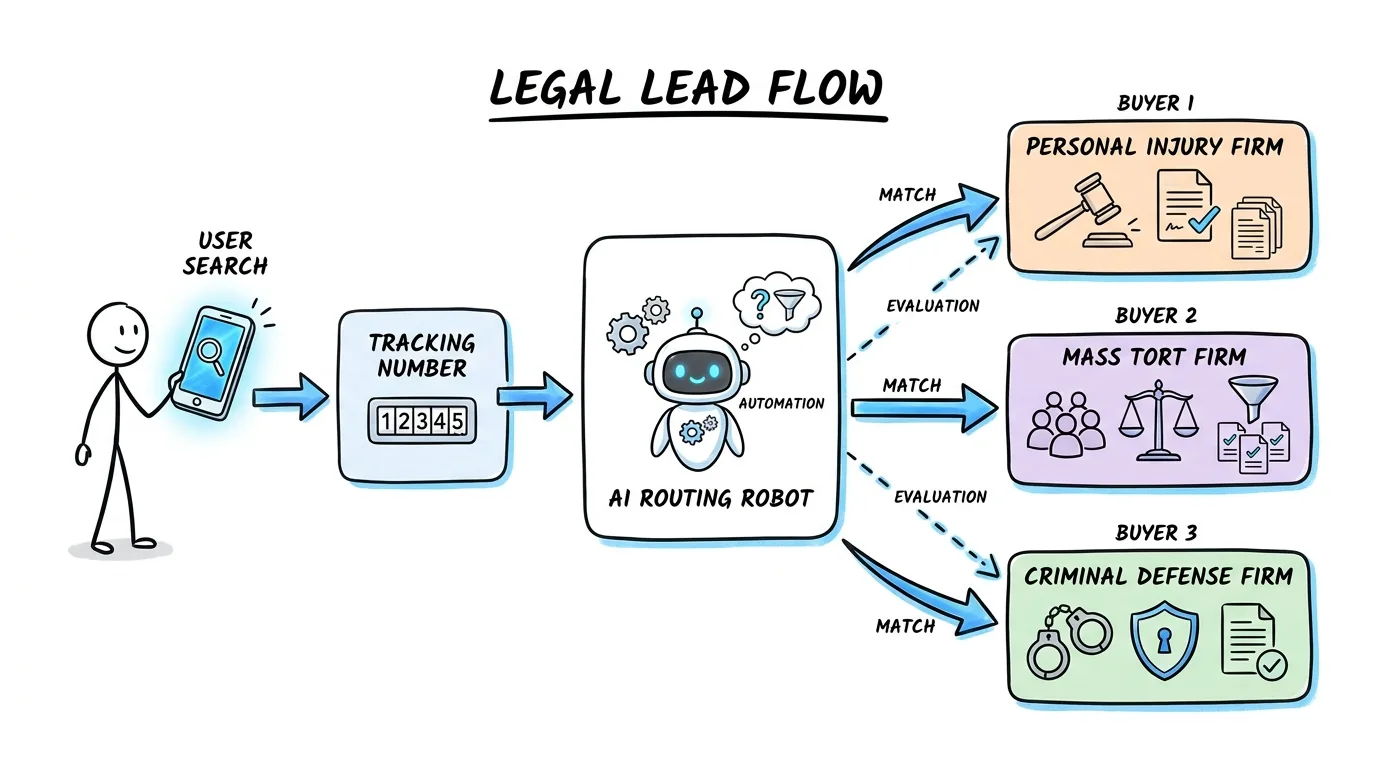
Geographic Filters match leads to attorneys licensed in the correct state and practicing in the relevant county or metro. An MVA lead from Houston should not go to a firm that only handles cases in Dallas.
Case Type Filters let buyers specify which MVA subtypes they accept: car only, truck, motorcycle, rideshare, or all. Some firms specialize in high-severity cases and only want leads involving hospitalization or surgery.
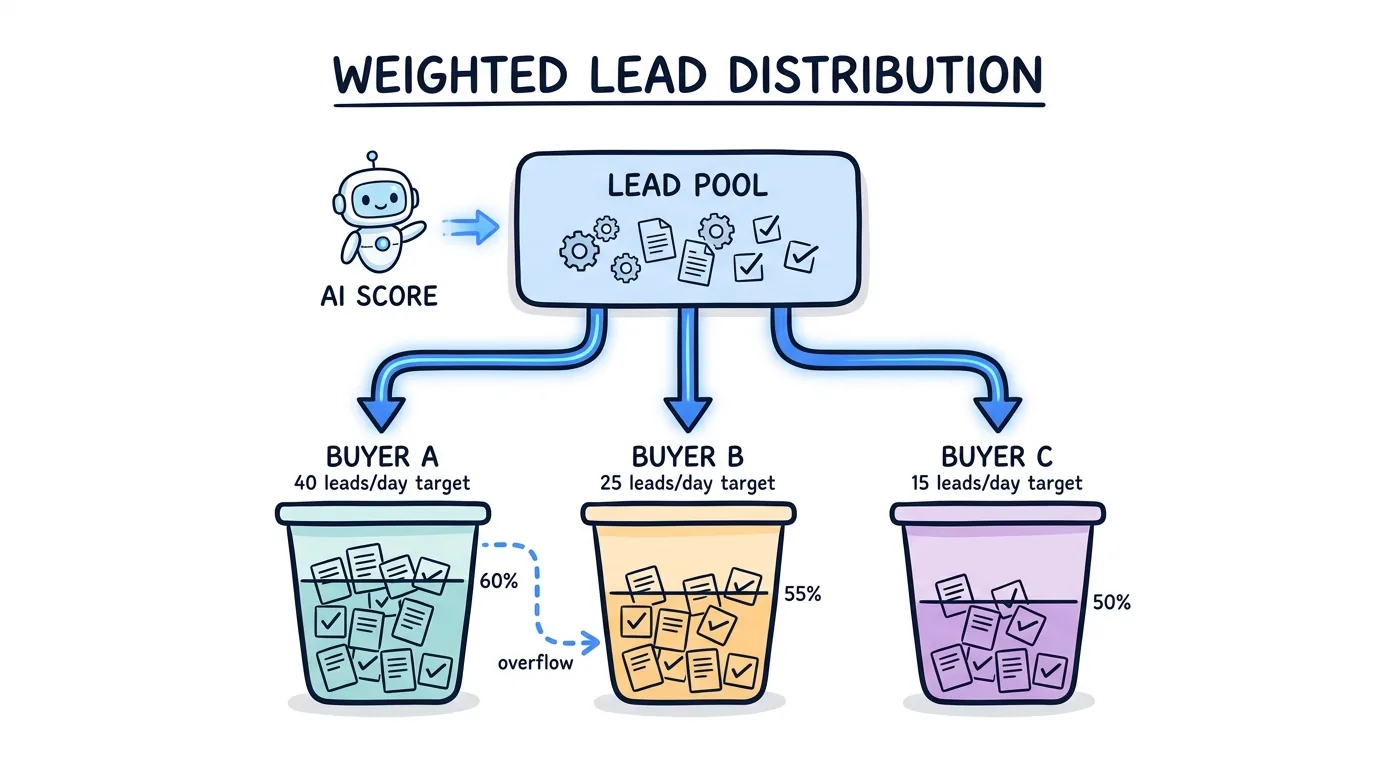
Cap Management prevents any single buyer from receiving more leads than they can handle. Daily and weekly caps ensure leads distribute across your buyer network evenly.
Distribution Methods include waterfall (priority-based), round robin, weighted, and ping-post bidding. For MVA leads, ping-post is common because it lets multiple firms bid on each lead in real time. Lead Distro AI supports all four methods with AI-powered scoring built in.

MVA Lead Quality: What Law Firms Look For in 2026
Law firms evaluate MVA leads on five core criteria before deciding whether to buy or continue buying from a source:
-
Accident Recency: Statutes of limitations vary by state (typically 2 to 4 years), but firms strongly prefer leads from accidents that happened within the last 30 days. Fresher leads convert at 3x to 5x the rate of older ones.
-
Injury Severity: Soft tissue injuries (whiplash, sprains) produce smaller settlements. Leads involving broken bones, surgery, or TBI are worth significantly more. The median PI verdict for auto accidents with serious injuries exceeds $60,000.
-
Liability Clarity: Leads where fault is clear (rear-end collisions, DUI accidents) are more valuable than cases with disputed liability or comparative fault. Firms want cases they can win.
-
Insurance Coverage: The at-fault driver having active insurance is essential. Leads involving uninsured drivers are harder to monetize unless the victim has uninsured motorist coverage.
-
Contact Accuracy: Valid phone numbers and emails with the lead actually answering when called. Bad contact data is the top complaint from law firms buying leads.
A lead scoring system that evaluates these factors before routing can dramatically improve buyer satisfaction and retention. This is where AI-powered scoring in your lead distribution platform pays for itself. For more on scoring methodology, read our AI lead scoring guide.
Compliance for MVA Lead Generation
Legal lead generation is one of the most heavily regulated verticals. Getting compliance wrong can result in six-figure fines and permanent damage to your business.
TCPA (Telephone Consumer Protection Act) requires prior express written consent before making marketing calls or sending text messages. Every MVA lead captured via web form must include clear, conspicuous consent language and a record of when and how consent was given. Under the FCC's January 2025 one-to-one consent rule, generic "marketing partner" consent no longer satisfies TCPA; each seller needs its own explicit, topically-related consent. For the full breakdown, read our TCPA compliance guide for lead distribution.
State Bar Advertising Rules vary by state but generally prohibit misleading claims, require attorney advertising disclaimers, and restrict solicitation of accident victims within certain timeframes. Some states (Florida, for example) have a 30-day no-contact rule after an accident.
Consent Documentation is your insurance policy. Every lead should have a timestamp, IP address, consent language version, and the exact form URL. Store this data for at least five years so you can produce the consent record if challenged.
FAQ
How much do MVA leads cost in California, Florida, and Texas?
MVA lead pricing varies by state, exclusivity, and lead type. Shared leads typically cost $20 to $60 nationally. Exclusive leads range from $100 to $250. In high-competition states like California, Florida, and Texas, pricing tends toward the upper end of those ranges due to greater attorney density and accident volume. Live transfers command $150 to $350 across all markets.
What is the best way to buy motor vehicle accident leads?
The most reliable way to buy MVA leads is through a lead distribution platform that provides real-time delivery, geographic filtering, and quality verification. Look for platforms offering exclusive lead options, consent documentation, and transparent return policies. Automated distribution ensures leads reach your intake team within seconds of submission.
How do I verify MVA lead quality?
Verify quality by checking five criteria: the accident happened recently (within 30 days is ideal), injuries are documented, liability is reasonably clear, the at-fault driver has insurance, and the contact information is accurate. AI-powered lead scoring systems can evaluate these factors automatically before routing to your intake team.
What is the difference between at-fault and no-fault states for MVA leads?
In at-fault (tort) states like California, Texas, and Georgia, accident victims file claims directly against the at-fault driver's insurance. In no-fault states like Florida, New York, and New Jersey, drivers first claim through their own PIP coverage and can only sue for serious injuries. No-fault states require additional qualification steps to confirm the lead meets the serious injury threshold.
Do I need TCPA compliance for MVA lead generation?
Yes. TCPA compliance is mandatory for any lead generation involving phone calls or texts. You must obtain prior express written consent, maintain consent records (timestamp, IP address, form version), and honor do-not-call requests. Under the FCC's 2025 one-to-one consent rule, each company contacting the lead needs its own explicit consent. Violations carry fines of $500 to $1,500 per call or text.
What states have the highest demand for MVA leads?
California, Florida, Texas, New York, and Georgia consistently rank as the highest-demand states for MVA leads. These states combine large populations, high accident volumes, and dense networks of personal injury attorneys. Pennsylvania, Illinois, Ohio, Arizona, and New Jersey round out the top ten.
How should MVA leads be distributed to law firms?
Use automated lead distribution software that matches leads to attorneys based on geographic licensing, case type preferences, daily caps, and bid price. Ping-post bidding is the industry standard for MVA leads because it lets multiple firms compete for each lead in real time, maximizing revenue for the seller.
Conclusion
MVA leads are the backbone of personal injury lead generation in 2026, driven by the volume of auto accidents and consistent demand from PI attorneys across all 50 states. The agencies that win combine efficient lead generation (paid search, social ads, SEO, and Spanish-language campaigns) with automated distribution that gets every lead to the right buyer in under one second.
State-level differences in tort systems, statutes of limitations, and insurance rules mean that your distribution platform must support geographic filtering and state-specific routing logic. Whether you are buying MVA leads in California, Florida, New York, or any other state, the difference between a profitable operation and a struggling one comes down to speed, quality scoring, and compliance.
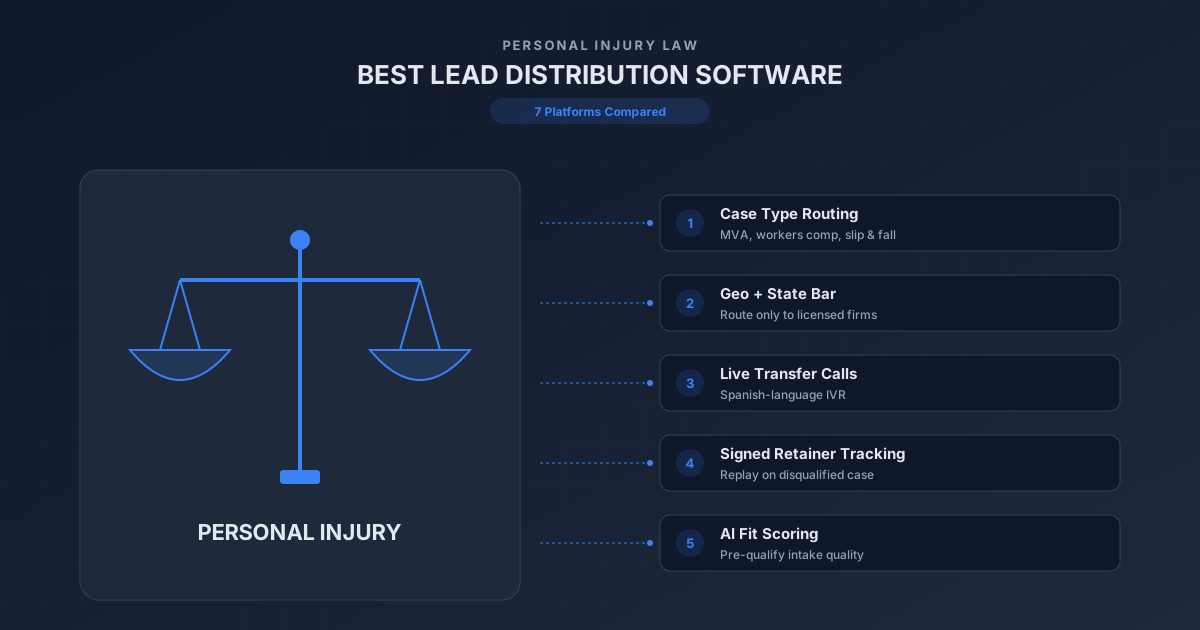
For PI law firms specifically (not aggregators), see the dedicated comparison of the best lead distribution software for personal injury law firms, which evaluates the same platforms on PI-specific requirements: TCPA documentation, live transfer routing, ZIP-based bidding, and Spanish-language IVR support.
Ready to distribute MVA leads to law firms in real time? Start your free trial and route your first lead in under 60 seconds.
About the Author
Founder & CEO of Lead Distro AI & Great Marketing AI
UC Berkeley graduate and former software engineer at Microsoft. Rafael built Lead Distro AI after managing over $10M in ad spend for performance marketing agencies (pay-per-lead and pay-per-call), including running campaigns for Neil Patel. He combines deep software engineering expertise with hands-on performance marketing experience to build tools that help these agencies scale profitably.
About Lead Distro AI
Lead Distro AI: AI-Powered Lead Distribution & Call Tracking That Maximizes ROI
The modern platform for pay-per-lead and pay-per-call agencies. Route, score, and deliver leads with AI-powered automation and real-time P&L tracking. Built for performance marketing agencies and lead buyers across legal, insurance, mortgage, solar, and home services verticals.
4 Distribution Methods
Waterfall, Round Robin, Weighted, Ping-Post
Ping-Post Auctions
Real-time bidding with sub-second routing
Real-Time P&L Reporting
Track revenue, costs, and profit per campaign
Call Tracking
Assign tracking numbers, record calls, and attribute conversions
AI Lead Scoring
Score every lead before routing to maximize conversion
Partner Portal
Self-serve dashboard for buyers to track leads